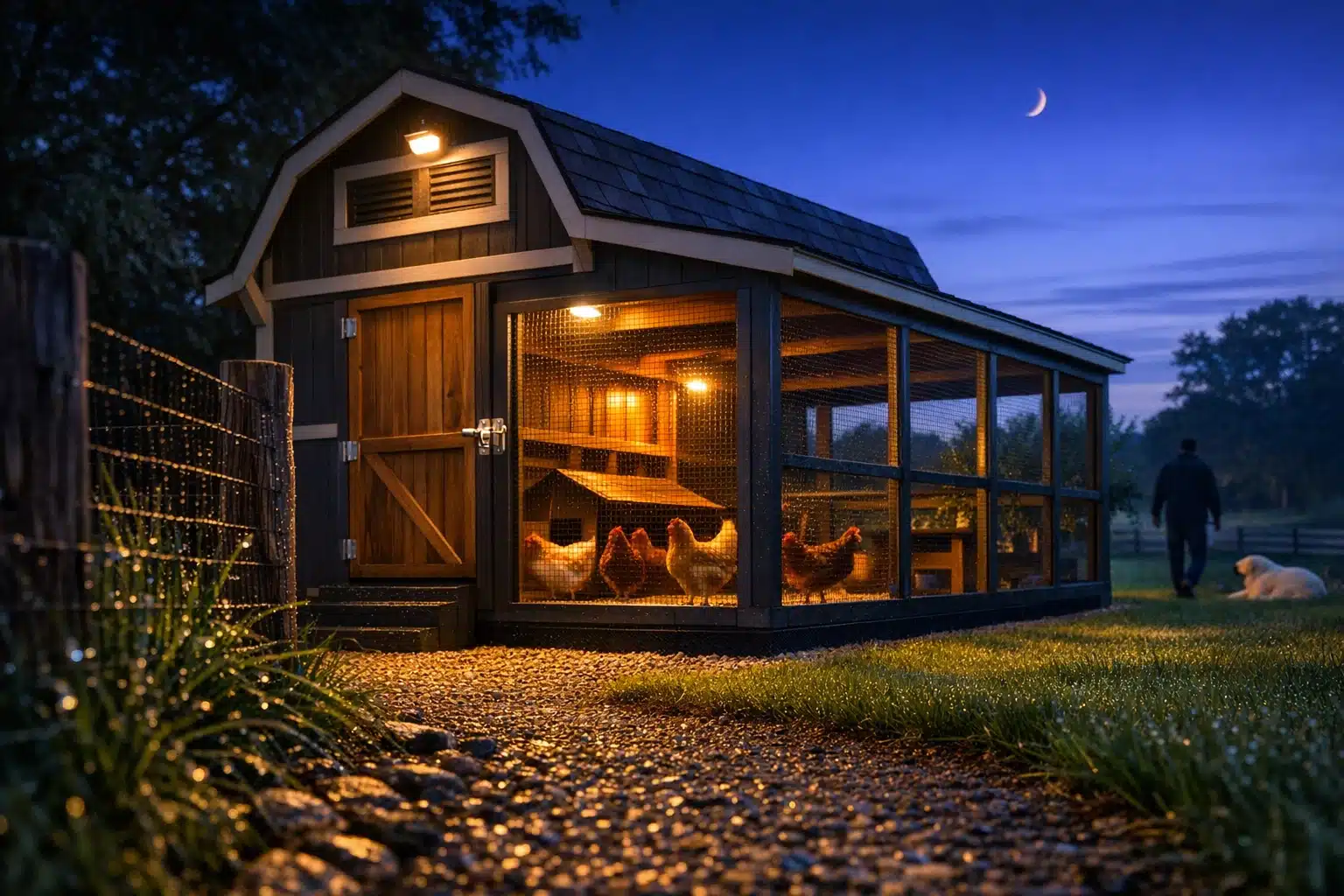
How to Keep Chickens Safe from Predators
Keeping chickens can feel wonderfully old-fashioned until a missing hen turns the morning quiet into a hard lesson. Foxes, raccoons, hawks, dogs, snakes, and even neighborhood rats do not care whether your flock is a backyard hobby or part of a serious homestead plan. Good protection is not built on luck; it comes from understanding predator behavior, designing strong housing, and following routines that close the small gaps where losses usually begin.
This article starts with a practical outline so you can see the full road map before diving into the details. After that, each section expands on one layer of protection, because the safest flocks rely on multiple barriers rather than a single gadget or a single fence.
- Identify the predators most likely to target your birds, eggs, and feed.
- Build a coop and run that resist digging, climbing, squeezing, and reaching.
- Use daily habits that reduce mistakes, stress, and preventable exposure.
- Add deterrents, guardians, and smart landscaping to strengthen weak points.
- Adjust for seasons, respond quickly after an attack, and create a long-term protection plan.
Know Your Predators Before You Try to Stop Them
The first step in protecting chickens is knowing exactly what may be hunting them. Many flock losses happen because keepers build for the predator they fear most, not the predator that actually lives nearby. A fox and a hawk do not attack in the same way, and a raccoon tests a coop very differently from a neighborhood dog. Once you understand the likely threats in your area, your decisions become sharper, cheaper, and far more effective.
Ground predators are often the most destructive. Foxes, coyotes, stray dogs, raccoons, opossums, skunks, rats, and weasels all appear in chicken country, although the mix varies by region. Foxes and coyotes usually strike at dawn, dusk, or overnight and may carry birds away. Dogs are especially dangerous because they can kill several hens in a frenzy even when they are not hungry. Raccoons are notorious for their dexterity. They can open weak latches, reach through wide wire, and injure birds without fully entering the coop. Weasels are smaller but particularly alarming because they can fit through surprisingly narrow gaps; an opening around 1 inch can be enough for some species.
Aerial hunters add another layer of risk. Hawks usually target younger or lighter birds during daylight, especially if cover is scarce. Owls tend to threaten flocks at dusk or after dark, which matters if birds roost outside or if a run is not fully enclosed. Snakes may go after eggs or chicks rather than adult hens, while rats often steal feed first and then become a wider hygiene and safety problem. In some places, large cats or bears are also real risks, requiring heavy-duty solutions beyond standard backyard setups.
Look for signs rather than guessing. A buried egg, scattered feathers, torn wire, missing chicks, paw prints, droppings, or attack times all tell a story. A clean disappearance may suggest a fox or hawk. Birds found dead but not eaten can point toward dogs or stress-triggered panic after a predator breach. Eggs vanishing one by one often suggest snakes, rats, or egg-eating mammals.
- Daylight losses often indicate hawks, dogs, or bold foxes.
- Nighttime entry attempts frequently involve raccoons, opossums, skunks, or coyotes.
- Repeated missing eggs may signal snakes, rats, or smaller opportunists.
- Damaged latches or wire points strongly toward raccoons or dogs.
Think like a tracker. Spend a week observing when your birds are most exposed, where your property borders woods or fields, and what kind of tracks appear after rain. Trail cameras can be extremely helpful, especially if attacks seem mysterious. When you know who is visiting, your defenses stop being generic and start becoming precise. That shift alone can prevent the kind of losses that make keepers swear the predator was somehow “impossible” to stop.
Build a Coop and Run That Predator-Proof Weaknesses, Not Just Weather
A chicken coop can look charming and still fail badly under pressure. Many commercially sold coops are designed more for appearance than defense, and predators notice flimsy construction faster than most owners do. If your goal is genuine safety, the coop and run must be built as if something will test every edge, because eventually something will. A secure setup does not need to resemble a bunker, but it does need to deny digging, squeezing, chewing, climbing, reaching, and lifting.
The most important material choice is wire. Standard chicken wire is useful for containing chickens, yet it is poor at keeping determined predators out. It bends, tears, and allows reaching through large gaps. Hardware cloth, especially 1/2-inch mesh, is widely recommended because it is much harder to rip apart and blocks small intruders better. Cover windows, vents, run walls, and any other openings with hardware cloth rather than lightweight netting alone. For protection against hawks and climbing predators, cover the top of the run as well.
The base of the structure matters just as much as the walls. Digging animals will test the perimeter, especially after rain softens the soil. Two common methods work well: burying hardware cloth vertically around the run edge or creating an outward-facing apron on the ground that extends 12 to 24 inches from the fence line. When an animal tries to dig, it hits the barrier before reaching the birds. Floors also deserve attention. Dirt floors can work if the perimeter is exceptionally secure, but wooden or solid floors reduce access for rats, snakes, and digging predators.
Latches are another frequent failure point. Raccoons can manipulate simple hooks and turn-buttons with surprising skill. Use locking carabiners, two-step latches, or keyed hasps on doors and nest box lids. Check hinges, corners, and roof seams as carefully as you check the front entrance. A predator often enters where the owner rarely looks. Ventilation is necessary, but every vent must be screened securely. Think of each gap as a question: could a paw, snout, claw, or small body fit through this?
- Choose 1/2-inch hardware cloth for vulnerable openings.
- Secure every door with predator-resistant latches, not simple hooks.
- Protect the run roof from hawks, owls, and climbers.
- Add an apron or buried barrier to stop digging.
- Inspect for gaps around vents, eaves, nest boxes, and pop doors.
Space and layout matter too. Overcrowded birds panic more easily, and panic can turn a minor breach into a pileup injury. Give hens enough roost space, keep feed dry and contained, and avoid dark, damp corners that encourage rats. If possible, use an automatic pop door as backup, but do not treat automation as a substitute for inspections. The strongest coop is not the prettiest one in the catalog. It is the one that stays boring to predators night after night, because every test ends in frustration for them and safety for your flock.
Use Daily Management to Prevent the Small Mistakes Predators Exploit
Even a solid coop can be undone by human routine. In many backyard flocks, the weak point is not lumber or wire but timing, habit, and assumption. Birds left out ten minutes too long, spilled feed near the run, a latch half-fastened after a long day, or a chick brooder placed where a rat can smell it from a distance can all invite trouble. Predator prevention works best when it becomes part of the keeper’s everyday rhythm rather than an emergency response after something goes wrong.
Start with lock-up discipline. Chickens are vulnerable when they are moving between free-range areas, run space, and roost time. Many predators learn those routines quickly. Foxes and coyotes often patrol at dawn or dusk because they know birds are active then. A dependable evening schedule matters more than many people realize. If your hens free-range, bring them in well before dark rather than waiting for the last pink streak in the sky. Automatic doors can help, especially for people with changing work hours, but they should be tested often and kept free of debris, ice, and battery problems.
Feed management is another overlooked issue. Grain scattered around the coop attracts rodents, and rodents attract larger predators. In other words, a messy feed area can turn a chicken yard into a dinner map for the entire food chain. Use rodent-resistant containers, clean spills promptly, and collect eggs regularly so snakes and egg thieves do not develop a habit. Waterers should also be maintained well; wet, muddy zones can hide tracks and increase disease pressure, which makes birds weaker and slower to react.
Your flock itself provides useful information if you pay attention. Chickens have distinct alarm behaviors. They freeze, bunch together, stare upward, or retreat suddenly when they sense danger. A rooster, when present, may give different warning calls for aerial versus ground threats. Quiet observation teaches you whether birds feel safe in their environment or remain on edge. A calm flock dust-bathing in the run tells one story. Birds pacing along the fence, refusing open ground, or scattering at shadows tell another.
- Lock birds in early enough that dusk never becomes a gamble.
- Store feed in sealed bins and remove leftovers that attract pests.
- Collect eggs often to discourage repeat visitors.
- Check latches, fencing, and door function every single day.
- Watch flock behavior for warning signs of pressure from nearby predators.
Supervised free-ranging is far safer than casual free-ranging. If you can be present, the risk drops substantially, especially in areas with hawks or roaming dogs. Temporary fencing can create safer grazing lanes, and movable shelters give birds places to dash under when a shadow passes overhead. Chicks, bantams, and injured birds need extra caution because they are easier targets. In practice, the best daily management is not dramatic. It looks like consistency: closing what should be closed, cleaning what should be cleaned, and noticing what changed before the change becomes a loss.
Add Deterrents, Guardians, and Smart Landscaping for Layered Protection
Good housing forms the core of predator safety, but many keepers gain an extra margin of security by shaping the area around the flock. Think of your property as a series of signals. Some features tell predators, “Easy meal here.” Others tell them, “Too much effort, too much exposure, try somewhere else.” Deterrents work best when they support sound construction and good routines rather than replacing them. A flashing gadget cannot compensate for an open roof or a weak latch, but a layered approach can make attacks much less likely.
Landscaping is often the simplest place to start. Predators love cover near the run: tall weeds, stacked boards, junk piles, dense brush, and abandoned equipment. These areas conceal movement and shorten the final rush toward birds. Keep grass trimmed around fences and maintain a clear buffer so you can see signs of digging or tracks. At the same time, chickens benefit from safe cover inside the run. Low shelters, tables, or planted areas protected by wire can help them dodge hawks without giving ground predators places to hide right beside the perimeter.
Lighting can help in some situations, though it is not a cure-all. Motion-activated lights may discourage certain nighttime visitors, especially timid or occasional intruders. However, animals such as raccoons and coyotes often adapt if the reward remains high. Noise deterrents and reflective tape can reduce hawk pressure temporarily, but many predators habituate over time. Rotating methods works better than relying on one trick forever. A property that changes its signals from time to time stays less predictable.
Guardian animals can be highly effective when matched to the right scale and system. Livestock guardian dogs are valuable on larger properties, but they require training, supervision, and suitability for poultry. Not every dog that loves the family will protect chickens safely. Some dogs become the threat. Geese may sound alarms, and roosters can warn hens, but neither is a substitute for secure housing. In some rural setups, electric fencing around the run perimeter adds a powerful extra boundary, especially for foxes, coyotes, and dogs. It requires maintenance, vegetation control, and regular voltage checks, yet it can dramatically improve results.
- Remove brush piles and hiding spots near the coop and run.
- Create protected cover inside the run so birds can evade aerial attacks.
- Use motion lights or rotating visual deterrents as supporting tools.
- Consider electric fencing where legal, practical, and properly maintained.
- Choose guardian animals only if their training and temperament fit poultry.
The smartest setups feel almost invisible in operation. Predators encounter fewer places to approach unseen, fewer chances to surprise the flock, and more signals that the property is not worth the risk. That is the real value of layered protection. It changes the cost-benefit equation for the predator. Instead of finding one easy opening, it meets distance, exposure, barriers, and interruption all at once. In that kind of environment, many would-be attackers simply move on.
Seasonal Adjustments and a Practical Conclusion for Backyard Chicken Keepers
Predator pressure changes with the calendar, which means a setup that works well in one season may become weaker in another. Spring often brings special danger to chicks and small birds because many wild animals are feeding young of their own. Summer vegetation can hide tunnel attempts and blind you to fence damage. Autumn may bring bold behavior as food patterns shift, while winter can push hungry predators closer to human spaces. Snow, mud, frozen latches, and storm damage all create new openings. The flock owner who adjusts early usually avoids the worst surprises.
After any attempted attack, respond as though a second one is likely. Predators that find chickens often return. Inspect every inch of the coop, run, and surrounding ground. Replace bent wire rather than merely straightening it. Reinforce latches, patch gaps, and review what happened at the exact time of day when the event occurred. If a hawk strikes repeatedly, increase overhead cover and reduce unsupervised ranging. If something dug under the fence, extend the apron and remove the loose soil advantage. If a dog got in, address fencing, neighbor communication, and local regulations as needed. The goal is not just recovery; it is preventing the predator from learning your flock is an easy target.
Emergency planning also matters. Keep a basic first-aid kit for poultry, a secure crate for injured birds, and contact details for a veterinarian or experienced poultry mentor if one is available. Stress alone can reduce laying, weaken immune response, and disrupt flock order, so quiet recovery space is helpful after an incident. Sometimes the best response is temporary confinement. Birds that usually free-range may need to stay in a fortified run for several days while you identify and correct the weakness.
For the average backyard keeper, the big lesson is wonderfully practical: do not chase perfection, build reliability. You do not need a glamorous farmstead or an endless budget to protect chickens well. You need strong wire, serious latches, clean feed habits, close observation, and a willingness to improve whatever failed the first time. The most successful flock keepers are rarely the luckiest people in the neighborhood. They are the ones who notice details, make seasonal changes before trouble starts, and treat safety as a system rather than a single product.
If you are raising a handful of hens for eggs, family enjoyment, or a deeper connection to homegrown living, predator control is part of responsible care. Safe chickens are calmer, healthier, and more productive, and that stability makes the entire experience more rewarding. Build in layers, stay observant, and let each season teach you something. Over time, your coop stops being a hopeful shelter and becomes what it should be from the start: a dependable place where your flock can rest without fear.