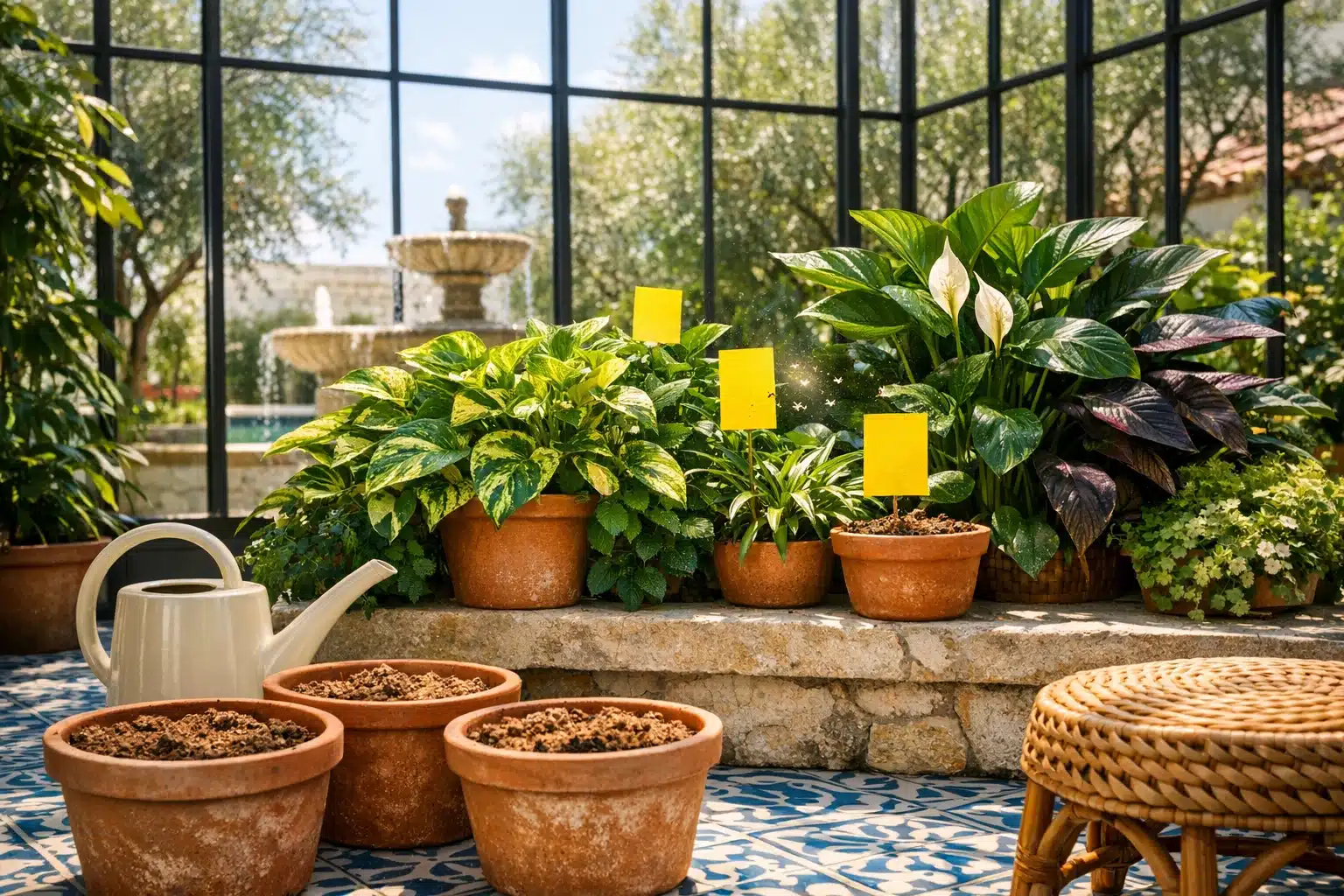
How to Get Rid of Gnats in the House
Gnats seem harmless until they start hovering over fruit bowls, drifting out of sink drains, or lifting from houseplants every time you water them. What makes them so irritating is their speed: a small annoyance can become a daily swarm once moisture and organic residue give them a place to breed. The encouraging part is that most indoor gnat problems are manageable with observation, cleanup, and a few targeted fixes. This guide shows you how to stop the cycle at its source instead of simply chasing adults through the air.
Many people call every tiny flying pest a gnat, but the label hides an important detail: different insects thrive in different places. A fruit fly problem usually starts in the kitchen, a fungus gnat issue often begins in damp potting soil, and drain flies are closely tied to slimy buildup inside pipes. If you match the treatment to the insect, the job becomes far easier and much less frustrating.
Outline
- How to identify the kind of gnat in your home and trace it back to the breeding source.
- How sanitation, moisture control, and inspection reduce the conditions that allow gnats to multiply.
- How to treat plant soil, drains, kitchens, and trash areas with source-specific methods.
- Which traps and control products work best for adult gnats, and where they fall short.
- How to build a simple long-term prevention routine so the problem does not return.
1. Identify the Type of Gnat Before You Start Treating
The first step in stopping gnats is surprisingly unglamorous: slow down and identify what you are looking at. People often reach for a spray as soon as tiny flies appear, but that is a little like mopping a floor while a faucet is still running. The adults you see are only the visible part of the problem. The real battle is at the breeding site, and that site changes depending on whether you have fungus gnats, fruit flies, or drain flies.
Fungus gnats are common in homes with potted plants. They are usually dark, slender, and weak fliers, often seen hovering around the soil surface or nearby windows. Their larvae live in damp potting mix and feed on fungi and decaying organic matter. In severe infestations, larvae may nibble on delicate roots, especially in seedlings and young plants. Their life cycle can be completed in roughly three to four weeks under favorable indoor conditions, which means a consistently wet planter can keep producing new adults with little interruption.
Fruit flies are usually tan to light brown and are strongly attracted to ripening fruit, sugary spills, alcohol, compost, and sticky trash residue. They reproduce quickly. In warm indoor conditions, a generation may develop in about a week to ten days, which helps explain why a neglected banana, juice spill, or recycling bin can suddenly seem alive with motion. If the insects gather near a fruit bowl, garbage can, or recycling area, fruit flies are a strong possibility.
Drain flies, sometimes called moth flies, look fuzzier and more triangular than the others. They rest on walls near sinks, tubs, or floor drains and tend to flutter rather than dart. The issue is not the drain opening itself but the organic film inside the pipe, where larvae develop. That slimy layer acts like a buffet.
A quick comparison can help:
-
Near plants: likely fungus gnats
-
Near produce or trash: likely fruit flies
-
Near sinks or showers: likely drain flies
If you want a simple test, place yellow sticky cards in plant pots, cover kitchen fruit, and tape clear plastic loosely over a suspected drain overnight after it has been dry for a while. Where the adults gather tells a story. Correct identification does not just save time; it prevents wasted effort. A vinegar trap will catch fruit flies, for example, but it will not solve a fungus gnat problem rooted in soggy potting soil. Once you know the culprit, the rest of the plan becomes much more precise.
2. Cut Off Food, Moisture, and Breeding Grounds
Gnats are opportunists. They do not need a dramatic mess to settle in; they only need enough moisture and organic material to complete their life cycle. That is why homes that look clean on the surface can still support an infestation. A drip under the sink, a layer of residue in a recycling bin, or a houseplant watered too often can quietly keep the insects in business. If identification tells you what kind of gnat you have, sanitation and moisture control tell you how to starve it out.
For kitchen-related gnats, start with the obvious and then move to the places people forget. Ripening fruit should be refrigerated or stored in sealed containers if fruit flies are active. Trash cans need more than a new liner; they need to be washed, dried, and checked around the rim, lid, and bottom seam. Recycling bins are frequent offenders because juice, wine, beer, and soda residue ferment quickly. Even a few drops left in a bottle can be enough to attract flies.
For plant-related gnats, inspect every pot instead of only the one that seems busiest. Fungus gnats often spread from pot to pot because adults are mobile, while the conditions they need are similar across a collection. Potting soil that stays damp for days, decorative cachepots that trap runoff, and trays that hold standing water all create favorable conditions. Overwatering is the classic cause, but poor drainage and compacted soil matter too.
Drain-related gnats call for a different mindset. Pouring liquid down the drain may move through the pipe, but the insects are often breeding in the gelatinous film clinging to the sides. That residue must be physically disrupted or dissolved with a suitable cleaner, otherwise the problem keeps returning like an unwelcome encore.
Key inspection points include:
-
Fruit bowls, onion baskets, potato bins, and bread boxes
-
Garbage cans, recycling bins, compost pails, and mop buckets
-
Plant saucers, nursery pots inside decorative containers, and damp potting mix
-
Sink overflows, floor drains, shower drains, and rarely used guest bathrooms
-
Leaks under sinks, around refrigerators, and near dishwashers
One of the most effective truths in pest control is also the least glamorous: adults are temporary, breeding sites are decisive. Swatting or vacuuming visible gnats can reduce annoyance, but if even one productive source remains, the population rebounds. Think of your home as a map of microclimates. Wherever moisture lingers and organic matter gathers, gnats see an opening. Close those openings, and the swarm loses momentum fast.
3. Use Targeted Solutions for Plants, Drains, and Kitchen Areas
Once you know where the gnats are coming from, use treatments that match the source rather than applying the same remedy everywhere. This is where many people finally turn the corner, because targeted control breaks the breeding cycle instead of merely thinning the adults. The method for a houseplant is not the method for a drain, and neither one fully solves a trash-area fruit fly issue.
For fungus gnats in houseplants, the goal is to make the top layer of soil less welcoming. Letting the upper inch or two dry between waterings is often one of the most helpful steps, provided the plant tolerates that schedule. Yellow sticky cards catch adults and help you monitor whether numbers are falling. If the soil is heavily infested, replacing the top layer or repotting with fresh, well-draining mix can help. Many plant owners also use products containing Bacillus thuringiensis israelensis, often sold for mosquito larvae control, because it can target larvae in moist growing media when used correctly. Beneficial nematodes are another option for gardeners who prefer a biological approach.
For fruit flies in kitchens, remove the attractants first and then use traps to catch stragglers. Toss overripe produce, wipe sugary residues, clean garbage and recycling containers, and check forgotten items such as potatoes in a pantry basket or onions stored under the counter. Store ripe fruit in the refrigerator during treatment. If you compost indoors, empty it more frequently and wash the container thoroughly between uses. A kitchen can look perfectly normal and still hide a breeding spot in a sticky bottle cap, a spill under a small appliance, or a wet sponge holder.
For drain flies, mechanical cleaning matters. Use a stiff drain brush or a flexible pipe-cleaning tool to scrub the slime from inside the pipe walls and around the drain opening. Enzyme-based drain cleaners can help break down organic buildup over time, but they work best when paired with physical cleaning. Hot water may assist with flushing loosened material, though it is not a complete treatment on its own. Avoid mixing chemicals or relying on harsh combinations, especially bleach-based products, which can be unsafe and are often ineffective against established organic film.
A practical comparison looks like this:
-
Plant pots: dry the surface, improve drainage, trap adults, treat larvae
-
Kitchen sources: remove food residue, seal produce, clean bins, trap adults
-
Drains: scrub buildup, use enzyme cleaners, repeat until activity stops
If the source is hidden, broaden the search. Check crawl spaces, basements, AC condensate lines, pet food areas, and any room where moisture collects quietly. Indoor gnat control is often less about force and more about accuracy. When the treatment matches the habitat, progress usually becomes visible within days, even if full elimination takes a few life cycles.
4. Compare Traps, Sprays, and DIY Methods Realistically
When gnats are flying around your face, it is completely reasonable to want a quick fix. The market is full of traps, aerosols, sticky cards, and home remedies, and many of them can help. The important word, however, is help. Very few adult-control tools solve an infestation alone. Their best role is to reduce the active population while source control does the deeper work in the background.
Apple cider vinegar traps are the classic example. They can be very effective for fruit flies because fermentation odors draw the insects in. A small dish or jar with vinegar and a drop of dish soap often catches plenty of adults. This method is cheap and easy, but it works best when the breeding material has already been removed. Otherwise, the trap becomes a side attraction while new flies keep emerging from a trash can, compost pail, or hidden produce item.
Yellow sticky traps are especially useful for fungus gnats because adults are drawn to the color and tend to hover near plants. These cards are excellent monitoring tools. If you place one in each pot cluster, you get immediate feedback about which containers are most active. What sticky cards do not do is kill larvae in the soil. They interrupt reproduction by capturing adults, but moist potting mix can keep producing more unless watering habits and soil conditions change.
Light traps can catch some flying insects in kitchens and utility areas, although their success varies depending on placement and competing attractants. Vacuuming adults off windows or around plants is another underrated tactic. It is simple, chemical-free, and satisfying in the way only a direct solution can be. Still, it is best viewed as population reduction, not a cure.
Sprays deserve a realistic warning. Aerosol insecticides may kill exposed adults quickly, but they rarely reach larvae in drains or soil. In cramped indoor spaces, routine spraying can be more irritating to people than decisive against the pest. For edible areas, food storage and surface cleaning remain more important than fogging the room with products. In plant care, broad spraying can also stress sensitive foliage if done carelessly.
Here is a balanced way to think about your options:
-
Best for fast adult reduction: vinegar traps, sticky cards, vacuuming
-
Best for long-term control: removing breeding material and correcting moisture problems
-
Best for monitoring progress: sticky traps and repeated visual checks
-
Least reliable when used alone: sprays and one-time DIY fixes
If there is a quiet villain in every indoor gnat story, it is impatience. People often stop as soon as the room looks calmer, only to have the problem return a week later. Adult traps are useful, even satisfying, but they are the cleanup crew, not the main strategy. The real win comes when traps catch fewer insects each day because nothing new is developing in the background.
5. Build a Prevention Routine and Know When to Ask for Help
Once the swarm is gone, prevention becomes much easier than cure. This is good news for busy households, renters, plant collectors, and anyone who would rather not turn pest control into a recurring hobby. Indoor gnats usually return through familiar doors: excess moisture, forgotten food residue, neglected drains, and overly wet soil. A short routine, done consistently, can keep those doors closed.
For kitchens, prevention starts with storage and follow-through. Refrigerate ripe fruit if your home tends to run warm, rinse recyclables, and empty food waste before it begins to ferment. Wipe under small appliances, clean trash can lids, and do not let dishwater, mop water, or sponge trays sit longer than necessary. If you keep a compost container indoors, wash it often and choose a model with a secure lid. These steps are mundane, but they are exactly the kind of mundane that works.
For plant owners, watering discipline is the long game. Use pots with drainage holes, empty saucers after watering, and choose potting mixes that do not remain soggy for long stretches. If certain plants always stay damp, consider adjusting light, airflow, or soil structure. A small fan in a plant room can help the surface dry faster, which makes conditions less comfortable for fungus gnat larvae. Periodic use of sticky cards can also act like an early warning system, showing activity before it becomes a visible cloud.
For drains, regular cleaning matters more than emergency action. Guest bathrooms, basement drains, and utility sinks are easy to ignore because they are used infrequently, which gives organic film time to build. Brushing drains occasionally and using an appropriate cleaner on a maintenance schedule can prevent that hidden layer from becoming an insect nursery.
A smart prevention checklist might include:
-
Check produce, trash, and recycling two or three times a week
-
Let plant soil dry appropriately between waterings
-
Inspect for leaks under sinks and around appliances once a month
-
Clean rarely used drains before odor or insect activity appears
-
Keep a few sticky traps on hand for quick monitoring
If gnats keep returning despite thorough cleaning and targeted treatment, the issue may be coming from a hidden leak, a wall void, a subfloor moisture problem, or plumbing buildup deeper in the system. That is a good time to call a landlord, plumber, or pest professional, especially if you notice musty smells, warped surfaces, or unexplained dampness.
Conclusion for Homeowners, Renters, and Plant Lovers
If you are tired of tiny insects turning your kitchen, bathroom, or plant shelf into a daily irritation, the most effective response is also the most practical: identify the insect, remove what feeds it, and treat the exact place where it breeds. Gnats thrive on small oversights, so steady habits beat dramatic one-time fixes almost every time. With cleaner drains, drier soil, better food storage, and a few well-placed traps, most homes can move from constant annoyance back to normal calm. In other words, the path out of a gnat problem is not mystery or luck; it is a series of simple corrections that add up quickly.